
The SaaS Sales Efficiency Calculator
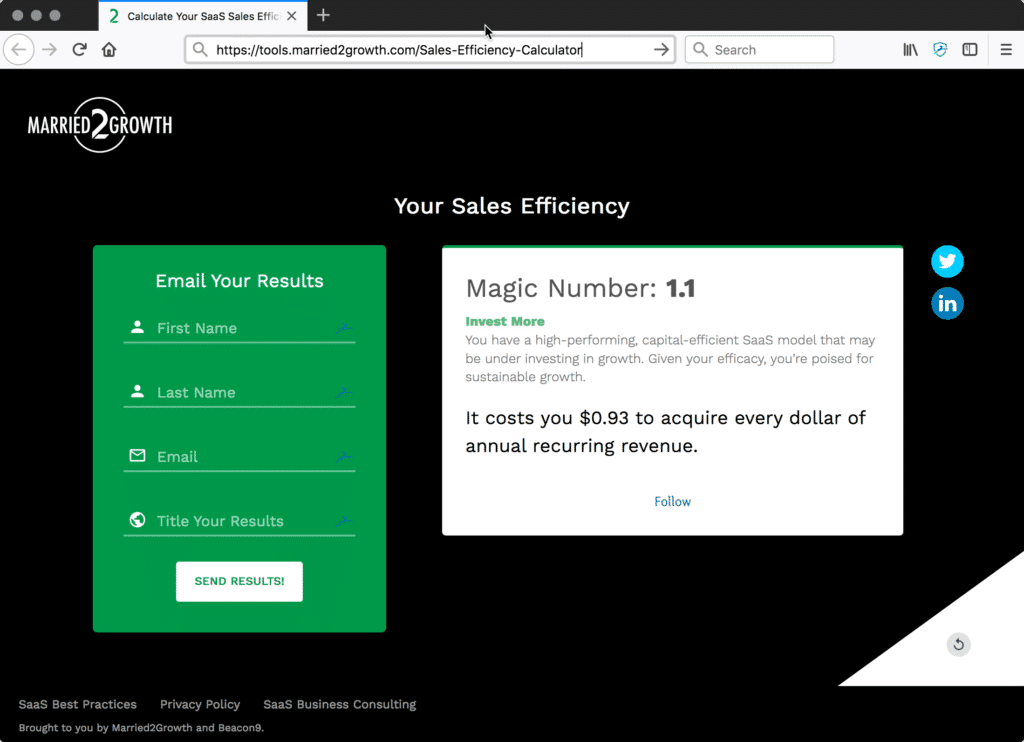
SaaS sales efficiency is a less popular metric than the obvious CAC and LTV, but when working with a company, it’s one of the first things I want to know. That’s why we launched a simple calculator over on our blog at Married2Growth and wanted to share it with you here.
Sales efficiency (also referred to as the Magic Number) can be calculated by taking current quarter new revenue annualized, divided by prior quarter sales & marketing expenses.
For example, if you spend $2 on sales & marketing in Q3 and generate $2 of ARR in Q4, your ratio is 1.
If you spend that same $2 in Q3 but generate only $1 in ARR in Q4, your ratio is 0.5. In this scenario, it will take you two years to recover your sales and marketing investment (that is if the customer doesn’t churn within those two years! If they do, you won’t recover it fully).
What makes a good SaaS Magic Number depends on who you ask.
While different people have their own guidelines for what they think a good ratio is (and that may even vary by the stage of the company, growth targets, etc), there is some consensus on a general rule of thumb.
- A ratio between 0-0.5 usually indicates the company doesn’t have a sustainable investable growth model and better sales efficiency is needed.
- A ratio of 0.5-1 is much better. While this isn’t necessarily capital efficient (which would make it a hard ratio for a bootstrapped company to maintain for any length of time), it does indicate sales & marketing efficiency and many investors view this as acceptable.
- A ratio of 1 or greater indicates strong sales efficiency and a capital-efficient growth model. But there is a caveat here—if it’s much higher than 1 you are probably under-investing in sales and marketing and are leaving growth on the table.
When you have good sales efficacy, it’s a great time to scale the sales team. Tom Tunguz explains it best:
“To make it more concrete, if a startup invests $500k in marketing and sales this quarter and generates $1M in incremental revenue, net of the cost to provide the service, for the next 12 months, the sales efficiency would be 2. Sales efficiency is a helpful, high-level indicator….When these figures exceed one, it’s likely time for a business to invest more capital into the sales and marketing efforts.”
And as I mentioned, on the flip side, a lower ratio can indicate areas to improve efficiency. From the OpenView Partners SaaS benchmarking report:
“Sales and marketing spend peaks at 50% of ARR at the expansion stage. Too many companies underinvest in sales productivity, saddling them with huge costs without the ROI…You should be carefully monitoring your sales efficiency and looking for ways to improve or maintain it year-over-year. Look out for the ‘leaky bucket’ problem, where you spend significant sums to acquire new customers, but then they churn shortly thereafter (churn bait).”
The SaaS Sales Efficiency Calculator
If you know your current quarter recurring revenue, your prior quarter recurring revenue and your prior quarter fully loaded sales & marketing expenses, the calculator will provide a Magic Number estimate.
There is no form required to use the calculator. If you want your results emailed to you, provide your name and email after your calculation results are provided.
We hope you find this useful!